
Why are companies increasingly moving away from custom development toward products and SaaS? And what advantages and disadvantages does this approach bring for both sides?
You can read not only about these topics in an interview with Marcela Štefcová for HN.cz. We present the full transcript of the interview below.
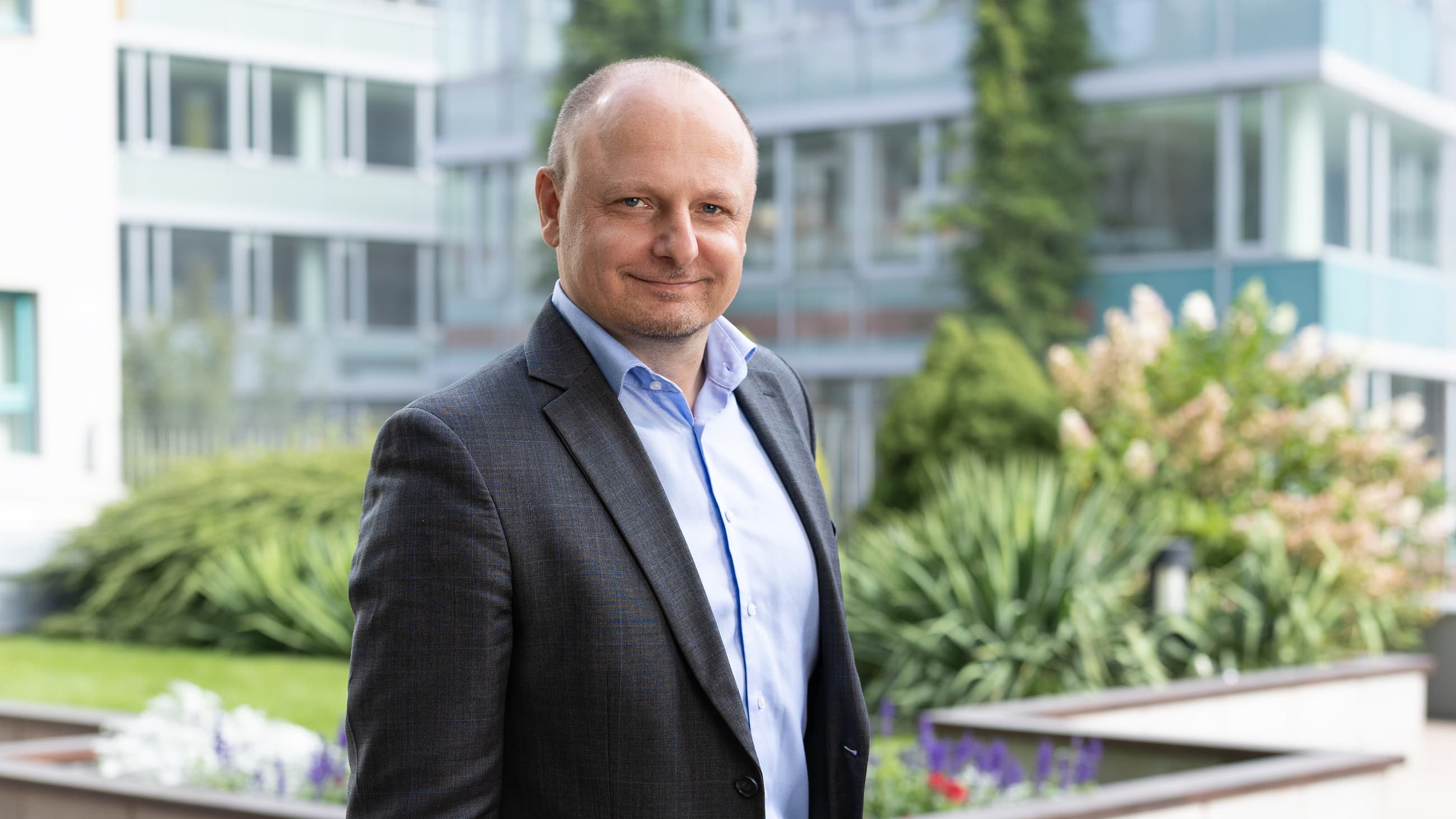
”We want a new system—build it exactly according to our ideas.” This has often been, and sometimes still is, a typical request from clients to the creators and suppliers of information systems. For many years, custom development was the main path on which a number of Czech software companies grew. “And that was OK—we went down that road as well,” says Vladimír Fuchs, Chief Sales Officer at OKsystem. However, this approach also has its limits, which companies are increasingly running into.
More and more of them are moving toward product development and SaaS—the Software as a Service model. This does not mean ignoring customer wishes. “Being customer-centric today does not mean agreeing to everything a client asks for, but offering a solution that delivers what they actually need—and often with additional, unplanned benefits,” Fuchs explains, describing the shift in mindset and approach to the development and sale of IT solutions.
OKsystem also started out with custom development, and your OKbase ranks among the most successful solutions on the market. What led you to make the change, and why did you decide to take the path of product development?
Yes, custom development is a natural starting point—you have a client who knows what they need, and you build it for them. It teaches you how to listen, meet requirements, and solve specific problems. That’s how we started 35 years ago as well. And 18 years ago, we began developing the HR system OKbase in the same way. However, as the number of clients grew—each project still essentially unique in its architecture and configuration—and as the volume of requirements increased along with the need to manage everything, you start to hit limits. You don’t have enough people or capacity, and you can’t innovate quickly or at scale.
About ten years ago, we reached a point where we realized that further growth along this path was not sustainable, and we began to change our approach. The decision to transform was also influenced by developments across the entire market and in technology, as well as by the steadily rising expectations of customers. We are seeing a similar transition taking place at other companies in the market too.
Does this change apply to all of your systems and products?
We are still creators of large, custom-built systems—that is our DNA, and we do not want to change it. At the same time, however, we have begun building a strong product line based on the SaaS model. This includes both new products and the transformation of existing solutions. For example, OKbase has undergone significant changes, both internally and on the customer side. The impulse does not come solely from our offering—customers often approach us themselves with a request to move to the cloud or to add a module they previously used outside of OKbase. They realize that they can now have everything within a single system and take advantage of additional related benefits. Together, we then reach the conclusion that a comprehensive OKbase delivered in a SaaS model is the right solution.
The shift toward a product-driven culture has also affected our strategic decisions. This is reflected, for example, in this year’s acquisition of the learning platform Scormium. It is a SaaS solution in its own right and also enables us to expand services within the existing product portfolio of OKsystem.
So this is also a major change in mindset and in the approach to customers. Was it difficult to start thinking differently?
Changing the mindset is probably the hardest part. A product approach requires a completely different way of thinking. It is no longer about someone assigning a task and a developer or consultant simply delivering it. People have to think more, monitor the market, test ideas, and develop new competencies. Priorities must be set more carefully, roadmaps created, and instead of being just project managers, people need to become leaders. The business model and project economics change as well, with significantly higher investments in UX/UI (user experience / user interface) and marketing. It is no longer about selling consulting services and development hours, but about offering an outcome—a functional system that delivers real value to the customer. A product has a longer return on investment than a custom project, with revenues coming in the form of monthly fees. But this model is predictable, repeatable, and sustainable for both sides.
What was difficult for us was learning to say “no” as well. That does not mean we are arrogant—quite the opposite. We communicate with customers much more, but the dialogue is different. We do not listen to “what I want,” but to “what is bothering me.” And we look for solutions together. Of course, when a customer proposes a change that would break the logic of the entire system, you have to refuse it—but you also have to be able to explain why.
And how does the client see it? What do they gain by choosing a product instead of a custom-built system?
The fundamental difference lies in sustainability. A custom solution exists for the here and now. A product continues to live on. It is continuously developed, updated, and adapted to new legislation, regulations, technologies, security threats, or trends—for example, the current use of AI to speed up and optimize selected processes. Clients can be more confident that the system will remain up to date, secure, and modern in the future.
At the same time, the initial investment is lower and the delivery time significantly shorter. With a comprehensive SaaS offering, the customer essentially rents the product—they do not need to purchase servers, deal with backups, or tie up the time of their own specialists. Everything runs in the cloud, securely, with guaranteed availability. And if the customer decides to end the cooperation, they can do so within a short period of time.
And the benefits for the supplier?
A major advantage of product development is scalability—you can reach a significantly larger number of customers, including those abroad, without having to expand team capacity to the same extent as with custom projects. You can also innovate more quickly. Clients no longer have to wait half a year or a year for a new version, nor do they need to take the system offline for half a day, as was common with custom solutions. Updates are delivered in short intervals, and users often do not even notice them. Another important benefit is the stability and predictability of revenues, which makes it easier to plan cash flow and investments in development. Of course, a substantial portion of the funds generated needs to be reinvested into further development, customer support, and strengthening the company’s position in the market.
Are there any disadvantages of the product model—for the client as well as for you?
For customers, it can sometimes be difficult to accept that a product is not built entirely to their specifications, but is to a certain extent universal. Some are concerned about losing control and a degree of flexibility. This requires a change in mindset not only on the supplier’s side, but also on the client’s. As a result, implementing a new system more often involves partial changes to processes and a redefinition of certain roles. That is why high-quality customer support during implementation is essential, along with a follow-up training system for both key and regular users. For customers, such process changes are often also an opportunity to truly modernize their operations and fully leverage their investment in a new IT system.
We always strive to find a balance between the universality of the product and specific requirements. For large customers who were accustomed to a high degree of customization, more explanation and trust-building were necessary. Today, OKbase has hundreds of customers, and more than ever before there is strong emphasis on the security of the entire system. This is particularly critical for large companies and therefore requires significant investment.
Are you satisfied with the progress and direction so far?
I believe that the product model is the path to long-term sustainability and innovation—not only for us, but also for our customers. We have already made tremendous progress in this direction, but we do not want to stagnate. Product development has a strong future ahead, and our ambitions are far from small. We track our goals, and as we succeed in meeting them, we look for ways to improve further. Success is built on the ability to respond to trends, technological changes, legislation, and user expectations. Every company transitioning to product development must continuously evaluate achieved milestones, growth pace, and customer feedback. So far, we have been successful in doing so with our products—also thanks to the strong support of our owners. We want to be successful and modern, and we want to be here in 30 years’ time as well. That is why we chose this path.
You can read the full interview in Czech on the website of Hospodářské noviny.